You’re standing outside your patient’s room, staring at the chart. Your attending just asked you to present your assessment, and your mind has gone completely blank.
They’re going to find out I don’t know what I’m doing.
Everyone else seems so confident. I’m the only one who’s struggling.
I don’t belong here.
If this internal monologue sounds familiar, you’re not alone, and you’re definitely not a fraud.
The Imposter Syndrome Epidemic in Healthcare
Here’s what nobody tells you in PA school: feeling like a fraud doesn’t mean you ARE one. It means you’re learning at a level that challenges you, which is precisely where growth happens.
Research shows that up to 70% of people experience imposter syndrome at some point in their careers, and that number skyrockets in high-stakes fields like healthcare. Why? Because in medicine, the gap between “what you know” and “what you feel you should know” is painfully visible every single shift.
But here’s the truth that changed my perspective after 32 years in clinical practice: That gap isn’t evidence of inadequacy. It’s evidence of awareness.
The fact that you recognize how much you don’t know? That’s clinical wisdom, not clinical weakness.
Why Your Brain Is Lying to You (And What to Do About It)
Imposter syndrome thrives on a cognitive distortion that psychologists call fixed mindset thinking. This is the belief that your clinical abilities are static; either you “have it” or you don’t.
Stanford psychologist Carol Dweck’s groundbreaking research on growth mindset offers us a powerful alternative: Your clinical competence isn’t fixed. It’s developing.
The difference isn’t semantic; it’s neurological. When you believe intelligence and skill are fixed, every mistake becomes evidence of your fundamental inadequacy. But when you think abilities are developed through effort and learning, mistakes become data points in your education.
Here’s the reframe that matters:
Fixed mindset: “I froze during that emergency. I’m not cut out for this.” Growth mindset: “I froze during that emergency. What can I learn from this experience so I respond differently next time?”
See the difference? One closes doors. The other opens them.
The Self-Compassion Solution
But a growth mindset alone isn’t enough when you’re drowning in self-doubt. That’s where self-compassion becomes your clinical superpower.
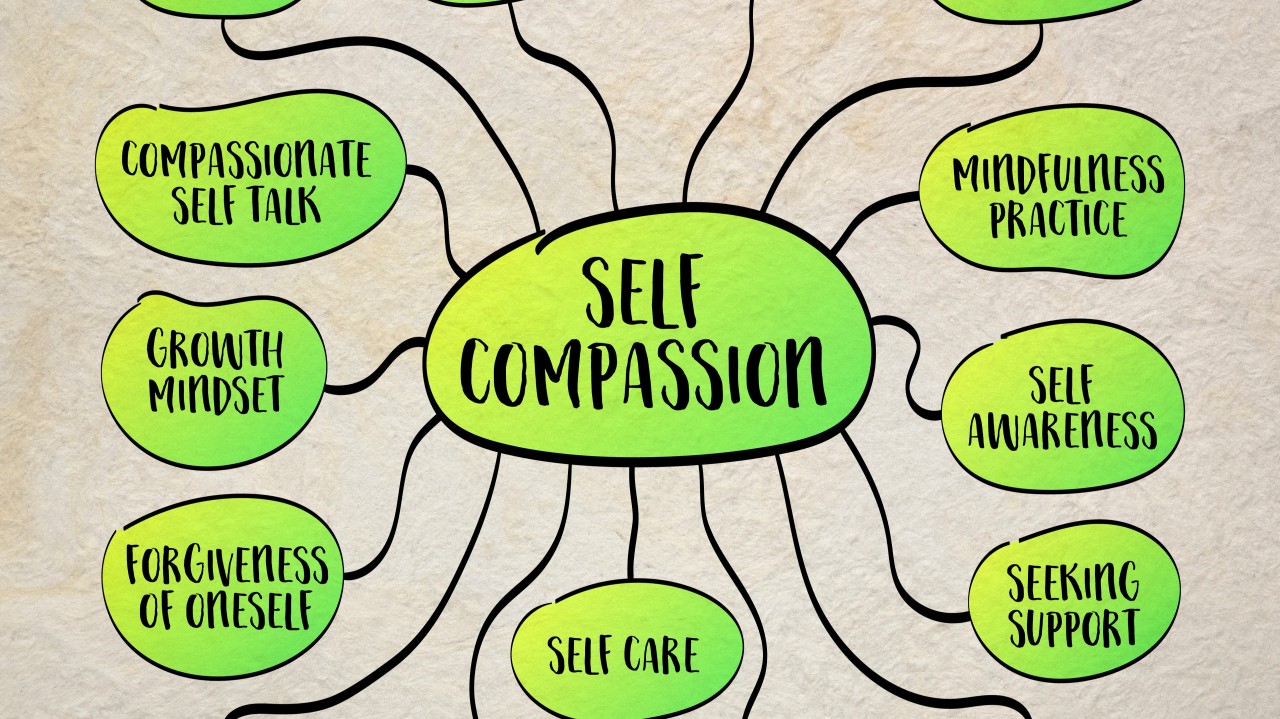
Dr Kristin Neff’s research on self-compassion shows that treating yourself with the same kindness you’d offer a struggling colleague doesn’t make you soft; it makes you resilient. Self-compassion has three components, all directly applicable to your clinical practice:
1. Self-kindness vs self-judgment: What would you say to a new PA who just made the same mistake you did? Would you tell them they’re incompetent and should quit? Of course not. You’d remind them that learning curves are steep and mistakes are part of mastery.
Now: Say that to yourself.
2. Common humanity vs isolation: Imposter syndrome whispers that you’re the ONLY one who doesn’t know what they’re doing. That’s statistically impossible. Every expert was once a beginner. Every confident clinician has moments of paralyzing doubt.
Your struggle isn’t evidence that you don’t belong. It’s evidence that you’re human.
3. Mindfulness vs over-identification. There’s a crucial distinction between “I made a mistake” and “I am a mistake.” The first is an event. The second is an identity.
When you catch yourself spiralling into “I’m a fraud,” pause and name what’s actually happening: “I’m having the thought that I’m a fraud.” That slight linguistic shift creates space between you and the thought. You’re not your thoughts; you’re the person observing them.
Three Practical Tools for Your Next Shift
Here’s what this looks like in real clinical practice:
Tool #1: The Language Swap
Pay attention to your internal monologue. When you catch yourself using fixed language (“I’m terrible at procedures,” “I’ll never understand pharmacology”), immediately reframe with growth language:
- “I’m not good at this yet“
- “I’m learning how to manage complex patients”
- “I’m developing my clinical reasoning”
That word “yet” is research-backed magic. Studies show it literally changes brain activation patterns, opening neural pathways associated with learning and persistence.
Tool #2: The Competence Timeline
Draw a timeline from your first clinical rotation to today. Mark every skill you’ve acquired, every diagnosis you’ve learned to recognize, every procedure you’ve mastered.
This isn’t arrogance, it’s evidence. When imposter syndrome tells you you’ve made no progress, your timeline tells a different story.
I still do this. After 32 years as a PA, I can trace my growth from the terrified new grad who couldn’t start an IV without supervision to someone who can confidently navigate complex dermatology cases. But I had to track it to see it.
Tool #3: The Self-Compassion Break
When you make a mistake or feel overwhelmed, try this 30-second practice:
- Acknowledge the moment: “This is really hard right now.”
- Normalize it: “Struggling is part of learning. Everyone goes through this.”
- Offer yourself kindness: “May I be patient with myself as I learn.”
It sounds simple, even hokey. But research from Neff’s Self-Compassion Lab shows that this brief intervention reduces anxiety, increases resilience, and improves performance over time.
What I Wish I’d Known (And What I Want You to Know)
Twenty years into my career, a younger PA confided in me: “You make it look so easy. I’ll never be that confident.”
I almost laughed. Not because it was funny, but because I remembered standing in her shoes, convinced that every other PA had it together and I was the only one white-knuckling through shifts.
Here’s what I’ve learned: Confidence isn’t the absence of doubt. It’s the willingness to move forward despite it.
The PAs you admire? They’re not fearless. They’ve just learned to reframe fear as information rather than evidence of inadequacy. They’ve learned to extend themselves the same grace they extend to their patients.
You can learn this too. Not because you’re broken and need fixing, but because you’re a learner in one of the most challenging fields that exists.
The Truth About Imposter Syndrome
Here’s the paradox: The very fact that you worry about being incompetent is evidence that you’re NOT incompetent. Truly unskilled clinicians suffer from the Dunning-Kruger effect; they’re too inept to recognize their incompetence.
Your self-doubt? It’s not a bug. It’s a feature. It means your standards are high and your self-awareness is intact.
The goal isn’t to eliminate imposter syndrome. It’s to change your relationship with it.
When that voice whispers, “You’re a fraud,” you can learn to respond: “No, I’m a learner. And that’s exactly who my patients need me to be.”
Your patients don’t need you to be perfect. They need you to be present, growing, and committed to their care. That’s not fraudulent. That’s clinical excellence.
What’s one thing you’re learning right now that feels impossibly hard? Drop it in the comments. Let’s normalize the struggle and celebrate the growth.
And if this resonated with you, follow me for more evidence-based strategies to thrive, not just survive, in your PA career.